treg vs Composio
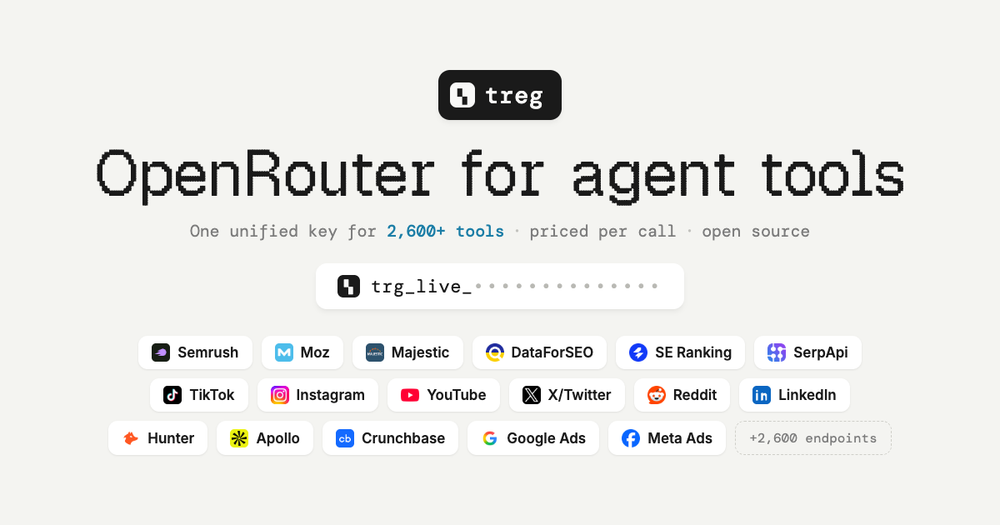
Both treg and Composio let AI agents call third-party APIs through a unified interface without managing per-provider credentials. The key difference is deployment model: Composio is a managed cloud service; treg is source-available and self-hostable, with a fair-code license that permits internal commercial use but restricts reselling it as a managed service.
| Feature | treg | Composio |
|---|
| License | Source-available (fair-code) | Proprietary |
| Self-hosting | Yes | No |
| Billing model | Per-call, at provider cost | Managed subscription |
| Catalog size | 2,630+ endpoints | 250+ apps |
| Bring your own key | Yes, unmetered | Limited |
treg is the better choice when you need full data residency, want to run the credential store on your own infrastructure, or need to bring existing provider accounts without paying on top of them. Composio is the more mature managed service with a larger ecosystem of pre-built agent actions and broader platform integrations. Teams that want zero infrastructure overhead and a polished UI for non-technical stakeholders will find Composio easier to adopt.
Toolhouse is a managed tool-hosting service that stores and runs tools for AI agents. treg's model is different: it is a credential proxy and registry rather than a tool-execution environment. In treg, the upstream provider runs the computation; treg injects auth and relays the request. In Toolhouse, Toolhouse runs the tool on your behalf in its own infrastructure.
| Feature | treg | Toolhouse |
|---|
| License | Source-available (fair-code) | Proprietary |
| Self-hosting | Yes | No |
| Execution model | Proxy to upstream | Managed execution |
| Billing | Per-call at cost | Managed |
Toolhouse suits teams that want a fully managed tool execution environment with no infrastructure concern. treg suits teams that want transparent per-call pricing against upstream providers, the ability to bring their own provider accounts, and the option to self-host the entire registry stack.