Open Source Alternatives
  • Alternatives
  • Categories
    Categories by size882 projects
    • Developer Tools461
    • AI & Machine Learning404
    • Web Development196
    • Business & Productivity191
    • Communication & Collaboration126
    • Security & Monitoring126
    • IT Management123
    • Product & Project Management106
    • Cloud & Hosting105
    • Data & Analytics104
    Browse all 21 categoriesLLMOps & AI Tooling, Design & Creative and 9 more
  • Blog
  • Advertise
SearchNotion, Slack, password manager.../
Submit
Open Source Alternatives
  • Alternatives
    • Developer Tools461
    • AI & Machine Learning404
    • Web Development196
    • Business & Productivity191
    • Communication & Collaboration126
    • Security & Monitoring126
    • Browse all 21 categories
  • Blog
  • Advertise
Submit your project

New open source projects by email

The projects we add and every new guide. Free, unsubscribe any time.

Open Source Alternatives LogoOpen Source Alternatives

Handpicked Open Source Alternatives to Paid Softwares

Product

  • Categories
  • Tag
  • Advertise

Resources

  • Blog
  • Collection
  • Submit

Company

  • Privacy Policy
  • Terms of Service
  • Refund Policy
  • Sitemap

Alternatives

  • Claude Code
  • Jira
  • Notion
  • Slack
  • Linear
  • Wispr Flow
  • All alternatives
© 2026 Open Source Alternatives. All rights reserved.
Open SourceAlternatives
Home/Categories/AI & Machine Learning/jentic-one
icon of jentic-one

jentic-one

Open source alternative to Composio, Portkey, Nango and Aembit

  • 186 stars
  • Apache-2.0
  • Active this week
  • Last commit 1 day ago

Last verified Oct 20, 2026

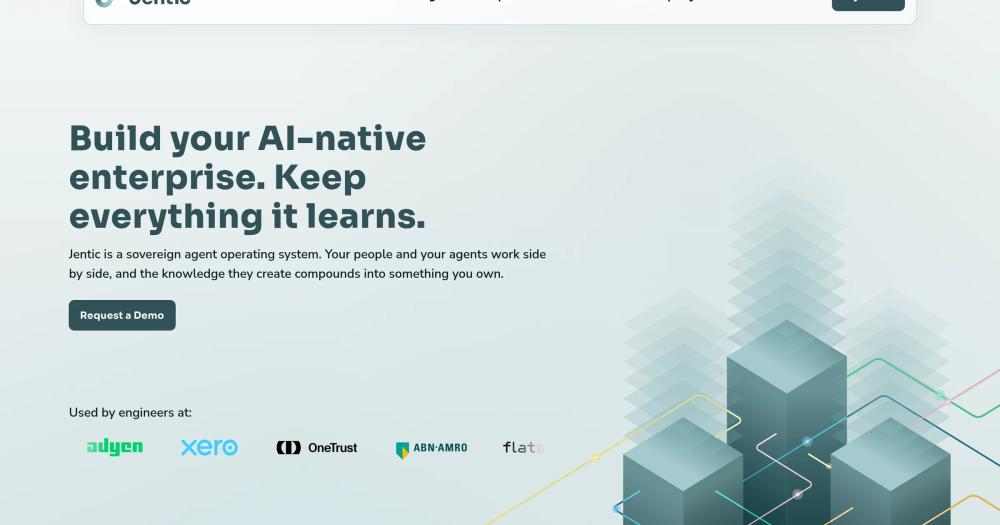
Secure API access for AI agents via a self-hosted broker that injects credentials at request time and enforces per-agent permission scopes. Apache-2.0.

Visit websiteGitHub186 stars
image of jentic-one
TL;DR

jentic-one Jentic One is a self-hosted execution layer for AI agents that provides real API access without distributing credentials to the agent. Agents route requests through the Broker, which checks per-agent permissions, injects the stored credential, and logs the call; the agent never receives the key. Licensed Apache-2.0 and deployable via Docker, it is best for developers running coding agents (Claude Code, Codex, Cursor) or teams that must pass a security review before agents touch production credentials.

Read the full breakdownHide the full breakdownWho it is for, how it works, trade-offs, the quick start and the FAQ
who it's for

Who jentic-one is for#

Developers running coding agents with real API access needs

A developer running Claude Code, Codex, or Cursor with tools that call GitHub, Jira, Slack, or internal APIs can register those services in Jentic One and route agent requests through the Broker. The agent gets per-endpoint scoping and the developer avoids placing keys in dotfiles, MCP configs, or env vars on the development machine.

Skip if:

If the agent only calls APIs in a sandboxed or read-only mode where key exposure is not a concern, the infrastructure overhead is unnecessary.

Small teams deploying agents in a private network or VPC

Teams running agents in a private network that need auditable API calls can self-host Jentic One alongside the agents. Every outbound API call produces an execution record on the local instance, providing a compliance-ready audit trail without routing agent traffic through a third-party service.

Skip if:

Teams where all API access already runs through a centralized gateway with existing credential management may find Jentic One redundant.

Engineers preparing agent workflows for a production security review

Before an agent-based workflow reaches production, a security team typically needs to verify that credentials are not accessible to the agent and that all API calls are logged. Jentic One's architecture addresses both requirements. The same-host hardening documentation covers the residual risk for co-located deployments.

Skip if:

If the organization already has an identity-aware proxy or service mesh handling API credentials, adding another credential layer increases operational complexity.

Teams moving agent orchestration off cloud-managed platforms

Teams currently using Microsoft Azure AI Foundry or Google Vertex AI Agent Builder for agent orchestration and wanting to bring credential management on-premises can use Jentic One for the credential and permission layer, keeping existing orchestration tooling such as LangChain or LlamaIndex in place.

Skip if:

If the team's agents use only the AI provider's own tool-calling with provider-managed credentials, there is no immediate credential broker gap that Jentic One fills.

the problem

The problem it solves#

When a coding agent needs to call a third-party API, the common approach is to place the key somewhere the agent can reach it: an env var, an MCP config file, a dotfile, or a prompt. Any compromise of the agent's context can exfiltrate those keys. There is no native mechanism to limit which endpoints one agent may call, no per-agent revocation path, and no execution record unless the upstream API itself logs calls.

Across teams and machines, the situation compounds. A single key shared among agents cannot be scoped to one agent's workflow. Rotating it invalidates every agent using it. Cutting off one compromised agent means pulling the key from all of them at once.

how jentic-one solves it

How it solves it#

Credential injection at execution time

The Broker adds the stored credential to each request after the permission check, before forwarding it to the upstream API. The agent making the call never receives the key; it gets only the API response. One stored credential can serve many agents, each with independent permission scopes, without the key ever leaving the Broker.

Per-agent permission scoping

Each registered agent gets a policy defining which API endpoints and HTTP methods it may call. Requests outside the policy are denied before they leave the Broker and never reach the upstream API. The scoping uses OpenAPI definitions, so operators can restrict access to specific operation IDs rather than broad endpoint patterns.

Full execution log on your instance

Every brokered call writes an execution record to the local database. The log names the agent, the API endpoint, the timestamp, and the outcome. Operators retain these records on their own infrastructure and can feed them into existing audit tools without routing them through a third-party service.

Multiple agent integration paths

Agents connect through the jentic CLI, a generated skill, the local jentic mcp server, or plain HTTP requests. The MCP server runs beside the agent as a thin client and holds no upstream credentials; those never leave the Broker. This makes Jentic One compatible with Claude Code, Codex, Cursor, Cline, or any custom agent that can call HTTP endpoints.

SQLite and PostgreSQL backends

The quickstart shape runs on SQLite with a single Docker volume, suitable for local development and small team use. Production deploys use an external PostgreSQL database with encrypted credential storage and a pinned image digest. Migrations run as a separate container step before starting the two service roles.

strengths · trade-offs

Strengths and trade-offs#

Strengths

  • Credentials never reach the agentThe Broker adds the credential after the permission check, so it never appears in the agent's context, prompt, or tool call response. A prompt injection or a poisoned tool description cannot exfiltrate a key the agent never received. This is structural protection, not prompt-level mitigation.
  • Per-agent revocation without rotating the keyEach agent has an identity and a permission policy, not a copy of the credential. Cutting off a compromised agent requires deactivating it in the control plane; the underlying API key is untouched and all other agents continue operating. Key rotation becomes a planned maintenance step rather than an incident response.
  • Apache-2.0 licenseApache-2.0 covers commercial and internal use, modification, and redistribution without copyleft requirements. You can run it in a commercial product, deploy it for a paying customer, or modify it for internal use without releasing source changes. There is no resale restriction or fair-code clause.
  • Multiple install shapesDocker quickstart with SQLite for development, Docker production install with external PostgreSQL, source build with make, Helm chart, systemd unit, and AWS Marketplace listing for EKS are all documented paths. Multiple install shapes mean Jentic One fits existing CI/CD, cloud, and on-premises workflows without forcing a specific deployment model.

Trade-offs

  • -Schemas and CLI commands unstable in public betaThe README explicitly warns that schemas and CLI commands can change between 0.x releases and recommends pinning a version if stability is required. Teams running Jentic One in production should track the changelog and pin the image by digest before upgrading. The project was created in March 2026 and is still pre-1.0.
  • -267 open issues on a young repository267 open issues on a repository with 186 stars and a March 2026 creation date indicates a high ratio of known gaps to resolved work. Many issues may be feature requests or documentation gaps rather than critical bugs, but teams should review the open issue tracker before committing to a production deployment.
  • -Same-host agents can read CLI credential stateThe broker's isolation protects credentials from agents running as different OS users or on different machines. An agent running as the same OS user as the Jentic CLI's credential-holding state can read that state. Teams running agents and the CLI on the same host under the same OS user must follow the same-host hardening guide in the documentation before relying on this isolation.
  • -Telemetry enabled by defaultAnonymous product telemetry is enabled in the quickstart config and pre-selected in the interactive installer. To disable it, set JENTIC__TELEMETRY__ENABLED=false explicitly in the env file or config. A config that omits the telemetry block entirely sends nothing, per the documentation. Teams operating in air-gapped or strict data environments should check this setting before their first run.
versus alternatives

jentic-one vs alternatives#

Jentic One vs Aembit

Both Jentic One and Aembit solve the problem of giving non-human workloads secure, scoped access to external APIs without distributing credentials. Aembit is a SaaS platform for workload-to-service authentication at enterprise scale; Jentic One is an Apache-2.0 self-hosted broker purpose-built for AI agents.

FeatureJentic OneAembit
LicenseApache-2.0Proprietary SaaS
Self-hostingYesNo
Target workloadAI agentsServices and workloads broadly
Per-agent policyYes (OpenAPI scoping)Yes (policy-based)
Execution logYes, on your instanceYes, vendor-hosted
PricingFree self-hostedPaid SaaS

Jentic One is the better choice when credentials must stay on your own infrastructure, when agent-specific OpenAPI-scoped policies matter, or when per-agent auditability on your own logs is a compliance requirement. Aembit is the stronger option for organizations already invested in enterprise identity federation across multiple services beyond AI agents, or teams that prefer a fully managed SaaS with vendor support.

Jentic One vs Azure AI Foundry and Vertex AI Agent Builder

Microsoft Azure AI Foundry and Google Vertex AI Agent Builder are full-featured cloud platforms for building, deploying, and orchestrating AI agents. They include managed model access, orchestration tooling, memory, and integrated credential handling, all within the vendor's cloud boundary.

FeatureJentic OneAzure AI Foundry / Vertex AI
LicenseApache-2.0Proprietary, cloud-hosted
Self-hostingYesNo
Credential storageYour infrastructureVendor cloud
Agent framework supportAny (LangChain, MCP, HTTP)Platform-specific
Execution log locationYour instanceVendor platform
Cost modelFree (infra costs)Pay-per-use / subscription

Jentic One fits better when credentials and execution logs cannot leave your network, when agents are built outside the Azure or Google ecosystems, or when cost predictability is a priority. Azure AI Foundry and Vertex AI Agent Builder are the stronger choice when you want a fully managed end-to-end platform with built-in model access and orchestration, and you are comfortable with data handling on the vendor's cloud.

install · quick start

Quick start#

bash
Self-hosting deploys via Docker Compose with the control plane, broker, and migrations in one stack.

```bash
curl -fsSLO https://raw.githubusercontent.com/jentic/jentic-one/main/deploy/docker/quickstart/docker-compose.yaml
docker compose up -d
docker compose exec app python -m jentic_one create-admin --email [email protected]
```
tech stack · detected from GitHub

What it's built on#

Languages
GoPythonTypeScript
Frameworks
FastAPIReact
Databases
PostgreSQL
Cache
Redis
Tooling
OpenAPI
frequently asked

FAQ#

Does Jentic One store my API keys on its own servers?

No. Credentials are stored encrypted on your own infrastructure, not on Jentic's servers. The Broker reads and injects them locally at request time. The quickstart config ships without an encryption keyset and warns against storing real credentials in that mode; production deployments require configuring credentials.encryption before storing a real credential.

Which agents work with Jentic One?

Any agent that can call HTTP endpoints, use an MCP server, or invoke the jentic CLI. The README lists Claude Code, Codex, Cursor, and Cline as tested examples. Agents integrate through the jentic CLI, a generated skill, the jentic mcp server, or plain HTTP; all paths terminate at the Broker.

Is Jentic One stable enough for production use?

Jentic One is in public beta. The README states that schemas and CLI commands can change between 0.x releases and recommends pinning a version if stability is required. The production install path, which uses external PostgreSQL, a pinned image digest, and TLS, is documented separately from the quickstart and is designed for production use.

How does Jentic One differ from LangChain or LlamaIndex?

LangChain and LlamaIndex are orchestration frameworks for building agent logic and chaining model calls. Jentic One is a credential broker: it handles secure credential injection into outbound API calls and enforces per-agent permission scopes. They serve different layers and can run together; Jentic One sits between the agent logic layer and the actual API endpoints.

Is telemetry sent by default?

Yes. Anonymous product telemetry is enabled in all quickstart config examples and is pre-selected in the interactive installer. To opt out, set JENTIC__TELEMETRY__ENABLED=false in your env file or config. A config block that omits the telemetry section entirely sends nothing, per the documentation.

also worth a look

Similar open-source tools#

Agent Reach

Featured

Alternative toFirecrawl

Give any AI agent internet access, free and local

  • 100,165 GitHub stars
  • MITLicence MIT

Bifrost

Alternative toPortkey

Open-source AI gateway with 23+ providers, failover, and MCP support.

  • 8,975 GitHub stars
  • Apache-2.0Licence Apache-2.0

Litellm

Alternative toPortkey

Self-hosted AI gateway for 100+ LLMs in OpenAI format

  • 61,759 GitHub stars
  • CustomLicence MIT with enterprise directory carve-out

servers

Alternative toComposio

Open reference servers for connecting AI to external tools and data

  • 91,470 GitHub stars
  • CustomLicence Apache-2.0 and MIT (dual, transitioning)

OmniRoute

Alternative toOpenRouter

352-provider AI gateway with automatic fallback and token compression

  • 78,353 GitHub stars
  • MITLicence MIT

treg

Alternative toComposio

One token for 2,600+ agent tools across 47 providers

  • 5,904 GitHub stars
by category

Open source tools in these categories#

404

AI & Machine Learning

freeCodeCamp, OpenClaw, REA (Reverse Engineer Anything)
78

APIs & Integration

n8n, Firecrawl, iptv
126

Security & Monitoring

REA (Reverse Engineer Anything), RustDesk, Uptime Kuma
86

DevOps & CI/CD

Nvm, Uptime Kuma, Netdata

Featured

Omnara

Alternative toCClaude Managed Agents

Open-source agent deployment API. Self-host or use Omnara Cloud.

  • 2,957 GitHub stars
  • Apache-2.0Licence Apache-2.0
  • #AI Agents

Inbox Zero

Alternative toSuperhuman

AI email assistant that drafts replies and clears your inbox

  • 12,712 GitHub stars
  • AGPL-3.0Licence AGPL-3.0
  • #Email

rakazo

Alternative toGrok Bot

AI teammates you own: your keys, your model, your machine.

  • 4,904 GitHub stars
  • Apache-2.0Licence Apache-2.0
  • #AI Agents
Feature your project

New open source projects by email

The projects we add and every new guide. Free, unsubscribe any time.

Find open source alternatives to paid software

/
  • Claude Code to OpenCode
  • Jira to Windshift
  • Notion to AppFlowy
  • Slack to Mattermost
  • Linear to GitLab
  • Wispr Flow to Handy
  • CapCut to Concat
  • Grok Bot to rakazo
  • Superhuman to Inbox Zero
  • Airtable to AITable
  • Muse to OpenClaw
  • GitHub Copilot to Cline
  • Datadog to Netdata
  • Microsoft Teams to Rocket.Chat
  • Pinecone to Qdrant
  • Zapier to n8n
  • Devin AI to OpenHands
  • Firebase to Supabase
  • 1Password to KeePassXC
  • Confluence to Docmost
  • Contentful to Strapi
  • Adobe Premiere Pro to Shotcut
  • ChatGPT to AnythingLLM
  • LangSmith to Langfuse