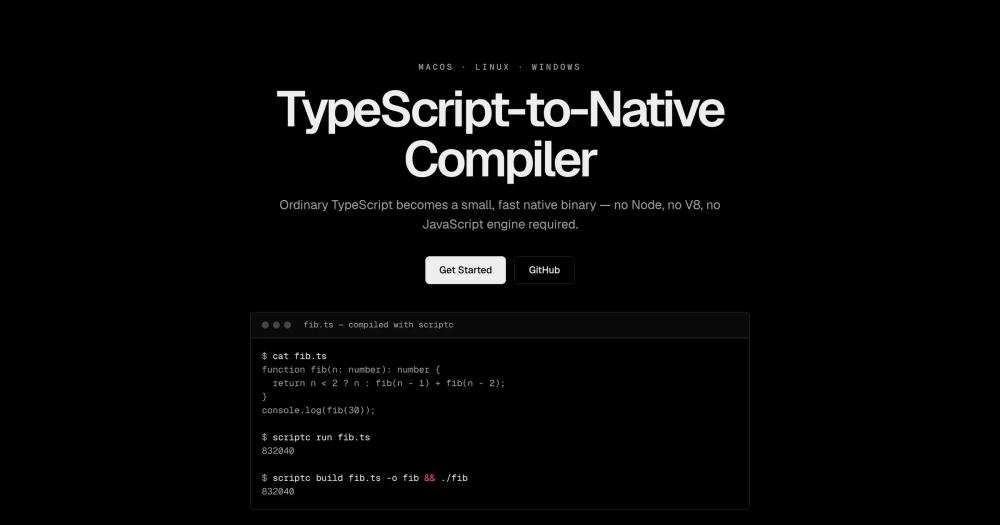
scriptc vs Node.js Single Executable Applications
Node.js Single Executable Applications (SEA) and scriptc both produce self-contained distribution artifacts from TypeScript programs, but the approaches differ fundamentally. Node SEA bundles the full V8 engine and Node.js runtime into the executable; scriptc compiles TypeScript to native machine code with no engine in the binary for programs that fit the static tier.
| Feature | scriptc | Node.js SEA |
|---|
| Binary size (hello-world) | ~320KB | 120MB+ |
| Startup time | ~4ms | ~35ms |
| Runtime required at deployment | No | No |
| npm package support | Via --dynamic (+620KB) | Built-in |
| WASI/WebAssembly target | Yes | No |
| Project status | Experimental | Stable (Node LTS) |
scriptc is the better choice when binary size directly matters: distributing CLI tools to users who download them, deploying to minimal containers, or shipping to environments where a 120MB binary is impractical. The ~4ms startup advantage matters for CLI tools called in tight loops or automation scripts. Node SEA is the better choice when you need a production-stable path, full npm ecosystem compatibility without the dynamic-tier trade-off, and tooling backed by the Node.js LTS schedule.
scriptc vs Rewriting TypeScript Logic in Go or Rust
Before native TypeScript compilation was possible, teams that needed native binaries from TypeScript codebases had two paths: bundle Node with the output or rewrite the relevant code in Go or Rust. scriptc offers a third option for programs that stay within the supported TypeScript subset. The trade-off is a younger, experimental toolchain versus the stable, production-tested ecosystems of Go and Rust. For teams with significant existing TypeScript code, avoiding a language rewrite is a concrete benefit; for greenfield projects where native performance is the primary goal, Go or Rust remain the more predictable choice.