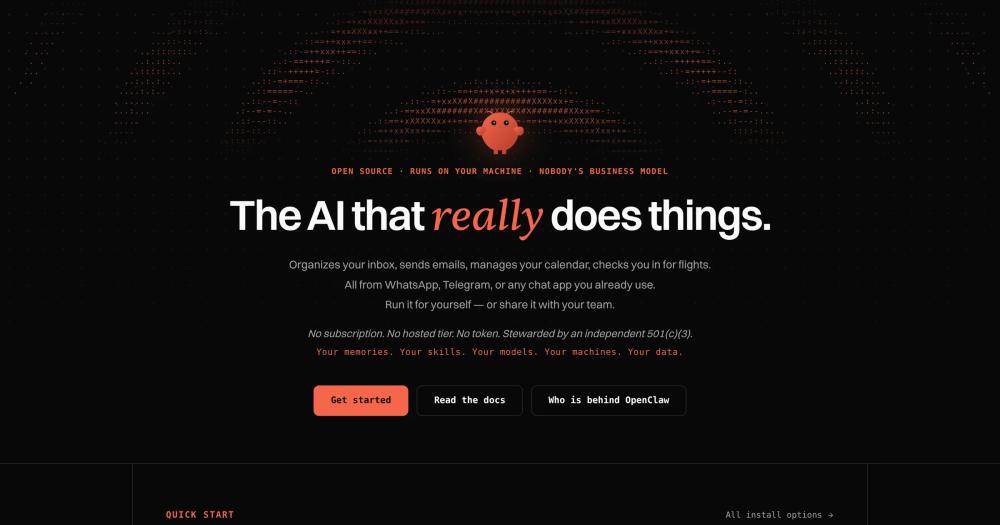
Self-Hosted vs Hosted Cloud Assistants
This comparison covers two distinct approaches to personal AI assistance: self-hosted agentic frameworks that run on infrastructure you control, and hosted cloud services where the vendor manages all infrastructure, memory, and data.
Data Ownership and Residency
With a hosted cloud assistant, every message, memory file, and context you share is stored on vendor servers. The vendor's privacy policy, data-retention schedule, and subprocessor relationships govern that data. For individuals or small teams with data-residency requirements, this creates a dependency that cannot be configured away.
A self-hosted assistant processes all sessions locally. Your conversation history, accumulated memory, and any files you share remain on hardware you own. You choose which model provider (such as OpenAI, Anthropic, or a local runtime) sees each prompt, and you can eliminate cloud data transfer entirely by running a local model.
Cost Model
Hosted cloud assistants typically charge a monthly subscription per seat, bundling model access, infrastructure, and storage. The price is fixed regardless of actual compute use, which favors heavy users but charges light users for capacity they do not consume.
Self-hosted frameworks carry no platform subscription fee. You pay only for the model provider API calls you make, at per-token rates. For light or intermittent use this is often cheaper; for heavy use, costs depend on provider and model selection.
Channel Reach and Integration
Hosted cloud assistants are generally accessed through a dedicated web or mobile interface. Third-party integrations are limited to what the vendor chooses to support and maintain.
Self-hosted agentic frameworks connect to messaging services you already use. A local control plane can route sessions across WhatsApp, Telegram, Slack, Discord, Google Chat, Signal, iMessage, and other channels without requiring a separate dedicated interface.
Extensibility
Hosted cloud services constrain customization to approved integrations and settings exposed by the vendor. Core behavior cannot be modified.
Self-hosted frameworks are designed to be extended. Skills, plugins, and device nodes can be added through a documented SDK. Community-built extensions cover calendar management, inbox automation, home automation, IoT device control, and development tool integrations. The plugin ecosystem and the ability to self-modify through conversation are capabilities that hosted platforms do not replicate.