Open Source Alternatives
  • Alternatives
  • Categories
    Categories by size882 projects
    • Developer Tools461
    • AI & Machine Learning404
    • Web Development196
    • Business & Productivity191
    • Communication & Collaboration126
    • Security & Monitoring126
    • IT Management123
    • Product & Project Management106
    • Cloud & Hosting105
    • Data & Analytics104
    Browse all 21 categoriesLLMOps & AI Tooling, Design & Creative and 9 more
  • Blog
  • Advertise
SearchNotion, Slack, password manager.../
Submit
Open Source Alternatives
  • Alternatives
    • Developer Tools461
    • AI & Machine Learning404
    • Web Development196
    • Business & Productivity191
    • Communication & Collaboration126
    • Security & Monitoring126
    • Browse all 21 categories
  • Blog
  • Advertise
Submit your project

New open source projects by email

The projects we add and every new guide. Free, unsubscribe any time.

Open Source Alternatives LogoOpen Source Alternatives

Handpicked Open Source Alternatives to Paid Softwares

Product

  • Categories
  • Tag
  • Advertise

Resources

  • Blog
  • Collection
  • Submit

Company

  • Privacy Policy
  • Terms of Service
  • Refund Policy
  • Sitemap

Alternatives

  • Claude Code
  • Jira
  • Notion
  • Slack
  • Linear
  • Wispr Flow
  • All alternatives
© 2026 Open Source Alternatives. All rights reserved.
Open SourceAlternatives
Home/Categories/Security & Monitoring/Bitwarden
icon of Bitwarden

Bitwarden

Open source alternative to 1Password, Dashlane, Keeper, NordPass and RoboForm

  • 20.4K stars
  • AGPL-3.0
  • Active this week
  • Last commit 1 day ago

Last verified Oct 20, 2026

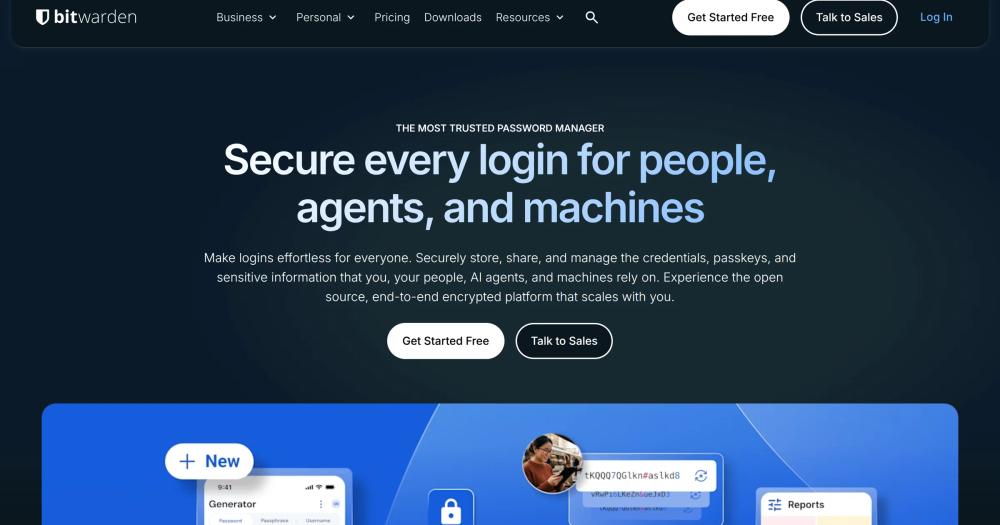
Bitwarden is an open-source password manager for securely storing, managing, and sharing sensitive information across devices and teams.

Visit websiteGitHub20.4K stars1-click deploy on Hostinger
image of Bitwarden
TL;DR

Bitwarden Server is the backend infrastructure for Bitwarden password management, including APIs, database services, Docker deployment assets, and supporting services for Bitwarden clients. It is best for teams that want to self-host the Bitwarden stack rather than rely only on the hosted service.

Read the full breakdownHide the full breakdownWho it is for, how it works, trade-offs, the quick start and the FAQ
who it's for

Who Bitwarden is for#

Security-conscious small teams

Bitwarden Server fits teams that want shared password management while keeping the backend and data under their own infrastructure controls.

Skip if:

You do not have the staff to operate and update a security-critical service.

Organizations with self-hosting requirements

Bitwarden is a strong fit when internal policy, customer requirements, or data location rules require a password manager that can run on controlled infrastructure.

Skip if:

A managed password manager with vendor-operated uptime and backups is a better fit for your team.

.NET-oriented infrastructure teams

Teams comfortable with C#, ASP.NET Core, Docker, and SQL Server will find the backend stack more familiar to inspect and operate.

Skip if:

You want a single lightweight binary or a database-free personal vault.

the problem

The problem it solves#

Password managers hold some of the most sensitive data a team owns: credentials, recovery details, shared secrets, and access paths into production systems. Hosted password management reduces operational work, but it can raise concerns about data location, admin control, and incident response.

Self-hosting a password manager is not just a single app install. Teams need backend APIs, identity flows, storage, notifications, admin interfaces, and repeatable deployment assets that can run reliably across their infrastructure.

how Bitwarden solves it

How it solves it#

Core backend services

The server repository contains the API, database, and infrastructure pieces that power Bitwarden client applications, giving operators the backend side of the password manager.

Docker-based deployment

The README documents Docker deployment for Windows, macOS, and Linux, with Bash and PowerShell scripts for install and start workflows.

.NET and SQL Server stack

Bitwarden Server is written in C# with .NET Core and ASP.NET Core, and uses T-SQL and SQL Server for the database layer.

Production container images

The README points to Bitwarden images on GitHub Container Registry and lists production service images for components such as API, Identity, Notifications, SCIM, and SSO.

strengths · trade-offs

Strengths and trade-offs#

Strengths

  • Clear self-hosting pathOfficial scripts and Docker documentation make Bitwarden Server a practical option for teams that need password management under their own infrastructure controls.
  • Mature backend architectureThe repository separates backend services used by Bitwarden clients, which gives operators a production-oriented stack rather than a small single-process password vault.
  • Cross-platform deployment toolingThe README includes install commands for Linux, macOS, and Windows, helping teams adopt Bitwarden across different operator environments.

Trade-offs

  • -Operational responsibility is realSelf-hosting password management means the team owns uptime, backups, updates, monitoring, and recovery for a security-critical system.
  • -Stack choices may constrain operatorsBitwarden Server uses .NET and SQL Server, which may be less attractive for teams standardized on lighter Linux-native database stacks.
  • -License should be verified separatelyThe fetched repository metadata did not expose a single SPDX license value, so teams should verify the current repository license terms before building policy around the server code.
install · quick start

Quick start#

bash
curl -s -L -o bitwarden.sh \
  "https://func.bitwarden.com/api/dl/?app=self-host&platform=linux" \
  && chmod +x bitwarden.sh
./bitwarden.sh install
./bitwarden.sh start
tech stack · detected from GitHub

What it's built on#

Languages
C#Rust
Runtimes
.NET
Infrastructure
Docker
Tooling
Webpack
frequently asked

FAQ#

What is Bitwarden Server?

Bitwarden Server is the backend infrastructure repository for Bitwarden client applications. It contains APIs, database code, Docker assets, and supporting backend services.

Can Bitwarden be self-hosted with Docker?

Yes. The README says Bitwarden can be deployed using Docker containers on Windows, macOS, and Linux, and it provides Bash and PowerShell scripts for setup.

What stack does Bitwarden Server use?

Bitwarden Server is written in C# using .NET Core and ASP.NET Core. Its database layer uses T-SQL and SQL Server.

Who should self-host Bitwarden?

Self-hosting fits teams that need direct control over password manager infrastructure and can handle backups, upgrades, monitoring, and incident response.

also worth a look

Similar open-source tools#

KeePassXC

Alternative to1Password

Cross-platform open source password manager with browser plugin

  • 29,338 GitHub stars

Passbolt

Alternative to1Password

Open source team password manager with sharing and audit

  • 6,180 GitHub stars
  • AGPL-3.0Licence AGPL-3.0

Psono

Alternative to1Password

Self-hosted password manager for teams with enterprise SSO

  • 110 GitHub stars

Passwordcockpit

Alternative to1Password

Self-hosted team password manager with role-based access

  • 136 GitHub stars
  • BSD-3-ClauseLicence BSD-3-Clause

Password Safe

Alternative to1Password

Store passwords in an encrypted local database, no cloud account

  • 884 GitHub stars
  • Artistic-2.0Licence Artistic-2.0

Vaultwarden

Alternative toBitwarden

Lightweight self-hosted password manager server, Bitwarden compatible

  • 69,337 GitHub stars
  • AGPL-3.0Licence AGPL-3.0
by category

Open source tools in these categories#

126

Security & Monitoring

REA (Reverse Engineer Anything), RustDesk, Uptime Kuma
191

Business & Productivity

OpenClaw, Excalidraw, RustDesk
123

IT Management

RustDesk, Immich, Stirling PDF
Hostinger

Run Bitwarden on your own server

Hostinger sets Bitwarden up as a one-click app on a VPS.

Deploy on Hostinger

Featured

Omnara

Alternative toCClaude Managed Agents

Open-source agent deployment API. Self-host or use Omnara Cloud.

  • 2,957 GitHub stars
  • Apache-2.0Licence Apache-2.0
  • #AI Agents

rakazo

Alternative toGrok Bot

AI teammates you own: your keys, your model, your machine.

  • 4,904 GitHub stars
  • Apache-2.0Licence Apache-2.0
  • #AI Agents

Inbox Zero

Alternative toSuperhuman

AI email assistant that drafts replies and clears your inbox

  • 12,712 GitHub stars
  • AGPL-3.0Licence AGPL-3.0
  • #Email
Feature your project

New open source projects by email

The projects we add and every new guide. Free, unsubscribe any time.

Find open source alternatives to paid software

/
  • Claude Code to OpenCode
  • Jira to Windshift
  • Notion to AppFlowy
  • Slack to Mattermost
  • Linear to GitLab
  • Wispr Flow to Handy
  • CapCut to Concat
  • Grok Bot to rakazo
  • Superhuman to Inbox Zero
  • Airtable to AITable
  • Muse to OpenClaw
  • GitHub Copilot to Cline
  • Datadog to Netdata
  • Microsoft Teams to Rocket.Chat
  • Pinecone to Qdrant
  • Zapier to n8n
  • Devin AI to OpenHands
  • Firebase to Supabase
  • 1Password to KeePassXC
  • Confluence to Docmost
  • Contentful to Strapi
  • Adobe Premiere Pro to Shotcut
  • ChatGPT to AnythingLLM
  • LangSmith to Langfuse