
Open Source Alternatives
  • Alternatives
  • Categories
    Categories by size905 projects
    • Developer Tools471
    • AI & Machine Learning408
    • Web Development198
    • Business & Productivity196
    • Security & Monitoring131
    • Communication & Collaboration128
    • IT Management126
    • Cloud & Hosting109
    • Product & Project Management106
    • Data & Analytics105
    Browse all 21 categoriesDesign & Creative, LLMOps & AI Tooling and 9 more
  • Blog
  • Advertise
SearchNotion, Slack, password manager.../
Submit
Open Source Alternatives
  • Alternatives
    • Developer Tools471
    • AI & Machine Learning408
    • Web Development198
    • Business & Productivity196
    • Security & Monitoring131
    • Communication & Collaboration128
    • Browse all 21 categories
  • Blog
  • Advertise
Submit your project

New open source projects by email

The projects we add and every new guide. Free, unsubscribe any time.

Open Source Alternatives LogoOpen Source Alternatives

Handpicked Open Source Alternatives to Paid Softwares

Product

  • Categories
  • Tag
  • Advertise

Resources

  • Blog
  • Collection
  • Submit

Company

  • Privacy Policy
  • Terms of Service
  • Refund Policy
  • Sitemap

Alternatives

  • Claude Code
  • Jira
  • Notion
  • Slack
  • Linear
  • Wispr Flow
  • All alternatives
© 2026 Open Source Alternatives. All rights reserved.
Open SourceAlternatives
Home/Categories/Security & Monitoring/Warrant
icon of Warrant

Warrant

Open source alternative to WorkOS FGA, Permit.io, Cerbos and Auth0

  • 1.3K stars
  • Apache-2.0
  • Updated this year
  • Last commit 321 days ago

Last verified Oct 6, 2026

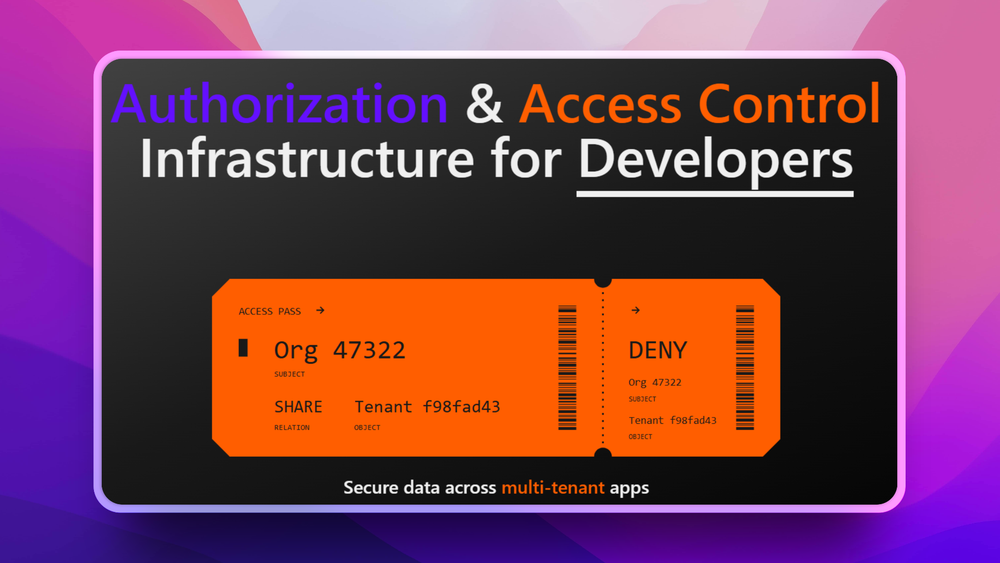
Secure authorization with an open source service for RBAC, ABAC, and ReBAC checks across SaaS apps, internal tools, and shared APIs.

Visit websiteGitHub1.3K starsDeploy on Hostinger
image of Warrant
TL;DR

Warrant is an Apache-2.0 fine-grained authorization service inspired by Google Zanzibar. It helps teams self-host RBAC, ABAC, and ReBAC checks, centralize permission rules, and audit access across apps and internal tools.

Read the full breakdownHide the full breakdownWho it is for, how it works, trade-offs, the quick start and the FAQ
who it's for

Who Warrant is for#

SaaS teams managing tenant roles and entitlements

Warrant fits products that need organization-level roles, feature access by plan, and resource-level sharing in one authorization model.

Skip if:

You only need a few hardcoded roles inside a single application.

Internal tools that need auditable access control

Centralizing checks helps teams control who can view or change sensitive operational data across admin panels, scripts, and support tooling.

Skip if:

Your internal tools can rely on a simple network boundary or manual approvals.

Teams evaluating self-hosted Zanzibar-style auth

The project is useful when developers want to test or extend a relationship-based authorization service before buying or standardizing on a managed platform.

Skip if:

You need a fully managed service with high-scale guarantees out of the box.

the problem

The problem it solves#

Authorization logic becomes hard to trust when roles, entitlements, and object permissions are implemented separately in each service. Teams end up debugging inconsistent rules, duplicating audit logic, and shipping brittle access checks.

A centralized authorization service reduces that drift. Warrant gives developers one place to model access rules, evaluate checks, and audit permission changes while still supporting tenant-specific and resource-level policies.

how Warrant solves it

How it solves it#

Centralized authorization APIs

Warrant exposes HTTP APIs for defining roles, permissions, features, tenants, users, and access rules from application code or operational tooling.

Multiple access models in one engine

The service is built around a Zanzibar-style relationship model that can represent RBAC, ABAC, and ReBAC without splitting authorization logic across separate systems.

Self-hosted deployment paths

The open source project documents local source builds and container-based deployment options, with MySQL, PostgreSQL, and SQLite support.

strengths · trade-offs

Strengths and trade-offs#

Strengths

  • Fits teams that need deployment controlSelf-hosting lets security-conscious teams keep authorization data, configuration, and upgrade timing inside their own infrastructure.
  • Covers common SaaS authorization patternsThe project is aimed at tenant roles, entitlements, object-level sharing, and auditable access checks instead of a narrow single-use policy flow.

Trade-offs

  • -Open source edition has throughput limitsThe README states the open source version is best for POCs, development or test environments, and lower-throughput workloads.
  • -Requires operating another serviceTeams must provision a datastore, manage configuration, and run the authorization service instead of delegating that operational work to a hosted vendor.
install · quick start

Quick start#

bash
Self-host Warrant locally from source:

```bash
git clone https://github.com/warrant-dev/warrant.git
cd warrant/cmd/warrant
make dev
./bin/warrant
```

For container-based setups, the repo also includes Docker deployment examples for MySQL and PostgreSQL.
tech stack · detected from GitHub

What it's built on#

Languages
Go
frequently asked

FAQ#

What is Warrant?

Warrant is an open source fine-grained authorization service for defining, checking, and auditing application access rules.

How do you self-host Warrant?

The project docs describe local builds from source plus deployment examples for Docker-based setups with MySQL or PostgreSQL.

When is Warrant a better fit than hosted authorization tools?

Warrant is a better fit when your team wants source access and self-hosting control. Hosted tools reduce operational work and may be a better choice for very high-throughput or fully managed requirements.

also worth a look

Similar open-source tools#

Oso Cloud

Alternative toPermit.io

Open source authorization with RBAC, ABAC, and ReBAC for any app

  • 3,488 GitHub stars
  • Apache-2.0Licence Apache-2.0

Doberman-Core

Alternative toZenity

Runtime guardrails that gate every AI agent tool call

  • 282 GitHub stars
  • Apache-2.0Licence Apache-2.0

limen

Alternative toAuth0

Composable authentication for modern Go backends

  • 551 GitHub stars
  • MITLicence MIT

Logto

Alternative toAuth0

Multi-tenant auth platform with SSO, RBAC, and social login

  • 14,731 GitHub stars
  • MPL-2.0Licence MPL-2.0

ZITADEL

Alternative toAuth0

Open source identity platform with SSO, RBAC, and multi-tenancy

  • 15,354 GitHub stars
  • AGPL-3.0Licence AGPL-3.0

Better Auth

Alternative toClerk

Drop-in TypeScript auth with MFA, SSO, and multi-tenancy support

  • 30,392 GitHub stars
  • MITLicence MIT
by category

Open source tools in these categories#

131

Security & Monitoring

REA (Reverse Engineer Anything), RustDesk, Uptime Kuma
79

APIs & Integration

n8n, Firecrawl, iptv
471

Developer Tools

superpowers, REA (Reverse Engineer Anything), Skills for Real Engineers
Hostinger

Run Warrant on your own server

Self-host Warrant on a Hostinger VPS.

Deploy on Hostinger

Featured

rakazo

Alternative toGrok Bot

AI teammates you own: your keys, your model, your machine.

  • 4,904 GitHub stars
  • Apache-2.0Licence Apache-2.0
  • #AI Agents

Omnara

Alternative toCClaude Managed Agents

Open-source agent deployment API. Self-host or use Omnara Cloud.

  • 2,957 GitHub stars
  • Apache-2.0Licence Apache-2.0
  • #AI Agents

Inbox Zero

Alternative toSuperhuman

AI email assistant that drafts replies and clears your inbox

  • 12,712 GitHub stars
  • AGPL-3.0Licence AGPL-3.0
  • #Email
Feature your project

New open source projects by email

The projects we add and every new guide. Free, unsubscribe any time.

Find open source alternatives to paid software

/
  • Claude Code to OpenCode
  • Jira to Windshift
  • Notion to AppFlowy
  • Slack to Mattermost
  • Linear to GitLab
  • Wispr Flow to Handy
  • CapCut to Concat
  • Grok Bot to rakazo
  • Superhuman to Inbox Zero
  • Airtable to AITable
  • Muse to OpenClaw
  • GitHub Copilot to Cline
  • Datadog to Netdata
  • Microsoft Teams to Rocket.Chat
  • Confluence to Docmost
  • Pinecone to Qdrant
  • Zapier to n8n
  • Devin AI to OpenHands
  • Firebase to Supabase
  • 1Password to KeePassXC
  • Contentful to Strapi
  • Adobe Premiere Pro to Shotcut
  • ChatGPT to AnythingLLM
  • LangSmith to Langfuse