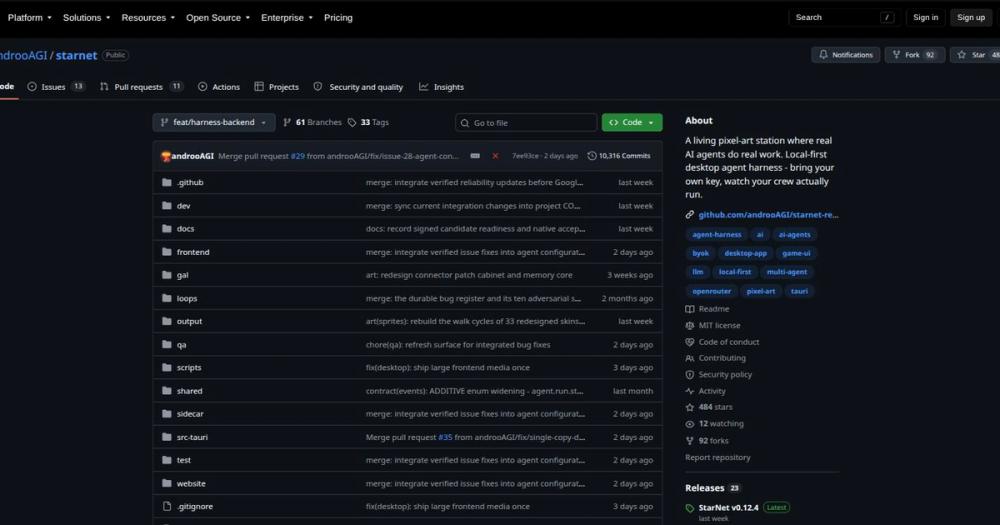
Most commercial AI agent tools in this space are managed services: you build agents in their interface, they run on their infrastructure, and your data (transcripts, instructions, API call logs) lives in their database. StarNet takes a different deployment path as a local desktop runtime.
StarNet vs Microsoft Copilot Studio
Microsoft Copilot Studio is a low-code AI agent builder inside the Microsoft 365 ecosystem. It handles infrastructure, authentication, and deployment for you and integrates natively with Teams, SharePoint, and other Microsoft services.
| Feature | StarNet | Microsoft Copilot Studio |
|---|
| License | MIT | Proprietary |
| Runs locally | Yes | No (cloud only) |
| Data storage | On your machine | Microsoft cloud |
| Model choice | Any (BYOK, Ollama) | Primarily Azure OpenAI |
| Pricing | Free (your API costs) | Per-user licensing ($30+/mo) |
StarNet is the better choice when you need local data storage, model flexibility beyond Azure OpenAI, or you work outside the Microsoft 365 ecosystem. Copilot Studio is worth choosing if your team is already in Microsoft 365 and you need out-of-the-box Teams integration with no infrastructure to manage.
StarNet vs Relevance AI
Relevance AI is a no-code AI agent builder with a visual workflow editor, multi-step task automation, and team collaboration features delivered as a managed SaaS service.
| Feature | StarNet | Relevance AI |
|---|
| License | MIT | Proprietary |
| Runs locally | Yes | No (cloud only) |
| Data storage | On your machine | Relevance AI cloud |
| Model choice | Any (BYOK, Ollama) | Supported providers only |
| Pricing | Free (your API costs) | $19/mo+ per user |
StarNet is stronger for users who need full data ownership, want to run local models via Ollama at zero API cost, or need a tool they can extend or modify. Relevance AI is a better fit when you need team collaboration features, shared agent libraries, and a polished no-code interface without managing any local installation.