Openfilm vs Remotion
Remotion is a React-based video framework where every scene is a React component and the video is rendered by driving the timeline with a browser. Openfilm uses a different model. Each shot is a plain HTML page with one function, and any coding agent can write those pages without learning React.
The key practical difference is the first-draft workflow. With Remotion, a developer writes React component code to define each scene, which means an AI agent needs React-specific knowledge to produce useful output. With Openfilm, the agent writes ordinary web pages it already knows, so the first draft comes from a single prompt with no framework overhead.
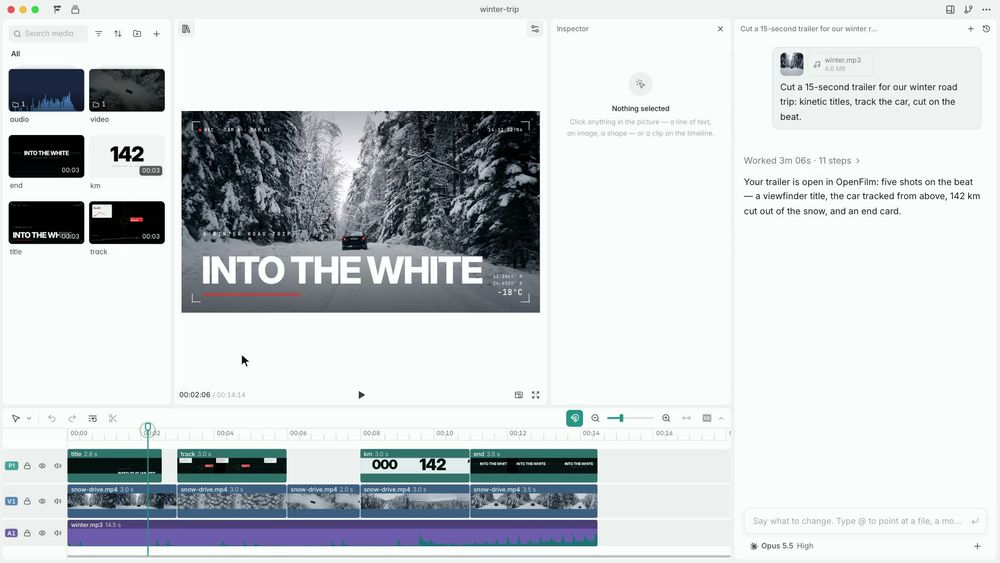
Openfilm includes a visual Studio editor where you can change any element in a shot, trim clips on the timeline, and adjust text and color without touching code. Changes in Remotion go back through the React components.
For teams building repeatable, data-driven video templates in TypeScript (personalized onboarding clips, weekly report cards, dynamic marketing videos with typed data props), Remotion is the better fit. Its composition model, typed props, and larger community make structured variation easier.
Openfilm is the better fit when you want an AI coding agent to write the initial draft from a plain-language prompt and a human to finish it in a visual editor, with the film stored as portable web files on your own disk.