Open Source Alternatives
  • Alternatives
  • Categories
    Categories by size905 projects
    • Developer Tools471
    • AI & Machine Learning408
    • Web Development198
    • Business & Productivity196
    • Security & Monitoring131
    • Communication & Collaboration128
    • IT Management126
    • Cloud & Hosting109
    • Product & Project Management106
    • Data & Analytics105
    Browse all 21 categoriesDesign & Creative, LLMOps & AI Tooling and 9 more
  • Blog
  • Advertise
SearchNotion, Slack, password manager.../
Submit
Open Source Alternatives
  • Alternatives
    • Developer Tools471
    • AI & Machine Learning408
    • Web Development198
    • Business & Productivity196
    • Security & Monitoring131
    • Communication & Collaboration128
    • Browse all 21 categories
  • Blog
  • Advertise
Submit your project

New open source projects by email

The projects we add and every new guide. Free, unsubscribe any time.

Open Source Alternatives LogoOpen Source Alternatives

Handpicked Open Source Alternatives to Paid Softwares

Product

  • Categories
  • Tag
  • Advertise

Resources

  • Blog
  • Collection
  • Submit

Company

  • Privacy Policy
  • Terms of Service
  • Refund Policy
  • Sitemap

Alternatives

  • Claude Code
  • Jira
  • Notion
  • Slack
  • Linear
  • Wispr Flow
  • All alternatives
© 2026 Open Source Alternatives. All rights reserved.
Open SourceAlternatives
Home/Categories/Databases & Storage/MongoDB
icon of MongoDB

MongoDB

Open source alternative to Amazon DynamoDB, Azure Cosmos DB and Google Cloud Firestore

  • 28.7K stars
  • Active this week
  • Last commit 2 days ago

Last verified Oct 20, 2026

Scale document-heavy applications with a distributed database built for flexible schemas, indexing, replication, and high-write workloads.

Visit websiteGitHub28.7K starsDeploy on Hostinger
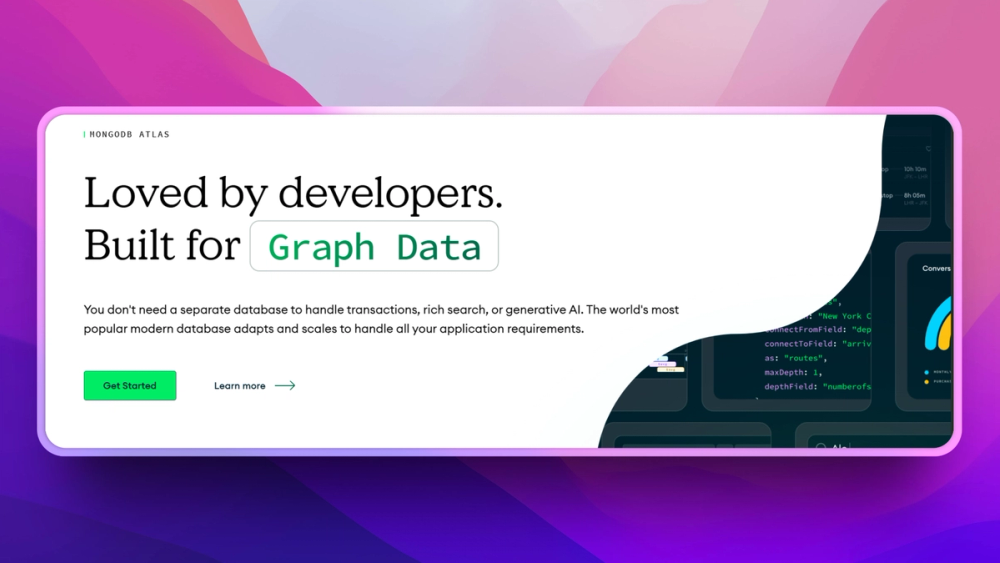
MongoDB preview
TL;DR

MongoDB is a document database for application teams that need JSON-like records, flexible schemas, indexes, aggregation, replication, and sharding. It competes with managed NoSQL services like Amazon DynamoDB and Azure Cosmos DB, while also offering self-managed deployments for teams that need database control. The current item record does not expose a verified SPDX license, so license-sensitive teams should confirm upstream terms before redistribution or service use.

Read the full breakdownHide the full breakdownWho it is for, how it works, trade-offs and the FAQ
who it's for

Who MongoDB is for#

Product teams building document-heavy apps

Use MongoDB when application records are naturally nested, evolve often, and need indexes over flexible document fields.

Skip if:

Skip it if strict relational constraints and SQL joins are central to the data model.

Platform teams running flexible app databases

Use MongoDB when the team wants a self-managed document database with replication and sharding options.

Skip if:

Skip it if your organization prefers a fully managed cloud database and accepts provider lock-in.

the problem

The problem it solves#

Application data does not always fit clean relational tables. Product teams often need to store nested objects, evolving attributes, and event-like records without rewriting migrations for every schema change. Managed NoSQL services solve scale and operations, but they can tie data modeling, pricing, and deployment region to one cloud vendor.

The bigger concern is long-term portability. Once app code, indexes, and operational playbooks depend on a managed database API, moving becomes expensive. Teams that want document modeling with more deployment choice need to understand both the database capabilities and the license terms behind them.

how MongoDB solves it

How it solves it#

Document data model

MongoDB stores JSON-like documents, which fits product data with nested fields, changing attributes, and object-shaped records. Developers can model many app entities closer to how they appear in code.

Indexes and aggregation queries

Use secondary indexes and aggregation pipelines to query and transform document data without exporting everything into a separate analytics tool. This supports common app patterns like filtering, faceting, and reporting.

Replication and sharding options

MongoDB supports replica sets for availability and sharding for horizontal scale. Those features matter when a document database moves from prototype storage to production infrastructure.

strengths · trade-offs

Strengths and trade-offs#

Strengths

  • Flexible document modelingCompared with rigid relational schemas, MongoDB gives teams more room to evolve object-shaped app data. Compared with DynamoDB, it can feel more familiar for teams that want richer ad hoc query and aggregation patterns.
  • Self-managed deployment pathTeams can run MongoDB themselves when they need infrastructure control, private networks, or deployment patterns outside a managed cloud service. MongoDB Atlas remains available when the team wants vendor-run operations.

Trade-offs

  • -License and operations need reviewMongoDB is not a simple permissive-license database in this item record, and production clusters require backup, monitoring, sizing, and upgrade discipline. Managed NoSQL services reduce that operations burden at the cost of vendor dependency.
versus alternatives

MongoDB vs alternatives#

MongoDB vs Amazon DynamoDB

MongoDB is a better fit when teams want a document database with richer query patterns, local development familiarity, and the option to run infrastructure themselves. DynamoDB is stronger when the priority is a managed AWS-native key-value and document service with minimal database operations. Choose MongoDB for deployment and modeling control; choose DynamoDB when AWS-managed operations and predictable cloud integration matter more.

tech stack · detected from GitHub

What it's built on#

Languages
CC++JavaScriptPython
Databases
MongoDBNoSQL
frequently asked

FAQ#

What does MongoDB replace?

MongoDB can replace managed NoSQL services like DynamoDB or Cosmos DB when teams want a document database with a self-managed deployment path. It can also replace some relational use cases where JSON-like documents fit better than tables.

Is MongoDB self-hosted?

Yes. MongoDB can be run on your own infrastructure, and MongoDB Atlas provides a hosted option. Self-hosting shifts backup, monitoring, scaling, and upgrades to your team.

What license does MongoDB use?

The item record lists NOASSERTION, so this draft does not make a clean open-source license claim. Teams should verify the current MongoDB Server license and obligations before redistribution, modification, or hosted service use.

also worth a look

Similar open-source tools#

Apache CouchDB

Alternative toCouchbase Capella

NoSQL database with multi-primary sync and HTTP API

  • 6,981 GitHub stars
  • Apache-2.0Licence Apache-2.0

TiKV

Alternative toAmazon DynamoDB

Distributed key-value store with ACID transactions at scale

  • 16,918 GitHub stars
  • Apache-2.0Licence Apache-2.0

RethinkDB

Alternative toMongoDB Atlas

Open source distributed document database with real-time feeds

  • 26,994 GitHub stars
  • Apache-2.0Licence Apache-2.0

PouchDB

Alternative toGoogle Cloud Firestore

JavaScript database that syncs with CouchDB, works offline

  • 17,623 GitHub stars
  • Apache-2.0Licence Apache-2.0

OrientDB

Alternative toAzure Cosmos DB

Multi-model NoSQL database: graphs, docs, and key-value

  • 4,995 GitHub stars
  • Apache-2.0Licence Apache-2.0

JanusGraph

Alternative toNeo4j

Distributed open source graph database for massive scale

  • 5,858 GitHub stars
  • Apache-2.0Licence Apache-2.0
by category

Open source tools in these categories#

61

Databases & Storage

Immich, Supabase, Redis
105

Data & Analytics

Firecrawl, ragflow, Worldmonitor
69

Backend Development

dify, graphify, Rust
Hostinger

Run MongoDB on your own server

Self-host MongoDB on a Hostinger VPS.

Deploy on Hostinger

Featured

Inbox Zero

Alternative toSuperhuman

AI email assistant that drafts replies and clears your inbox

  • 12,712 GitHub stars
  • AGPL-3.0Licence AGPL-3.0
  • #Email

rakazo

Alternative toGrok Bot

AI teammates you own: your keys, your model, your machine.

  • 4,904 GitHub stars
  • Apache-2.0Licence Apache-2.0
  • #AI Agents

Omnara

Alternative toCClaude Managed Agents

Open-source agent deployment API. Self-host or use Omnara Cloud.

  • 2,957 GitHub stars
  • Apache-2.0Licence Apache-2.0
  • #AI Agents
Feature your project

New open source projects by email

The projects we add and every new guide. Free, unsubscribe any time.

Find open source alternatives to paid software

/
  • Claude Code to OpenCode
  • Jira to Windshift
  • Notion to AppFlowy
  • Slack to Mattermost
  • Linear to GitLab
  • Wispr Flow to Handy
  • CapCut to Concat
  • Grok Bot to rakazo
  • Superhuman to Inbox Zero
  • Airtable to AITable
  • Muse to OpenClaw
  • GitHub Copilot to Cline
  • Datadog to Netdata
  • Microsoft Teams to Rocket.Chat
  • Confluence to Docmost
  • Pinecone to Qdrant
  • Zapier to n8n
  • Devin AI to OpenHands
  • Firebase to Supabase
  • 1Password to KeePassXC
  • Contentful to Strapi
  • Adobe Premiere Pro to Shotcut
  • ChatGPT to AnythingLLM
  • LangSmith to Langfuse